

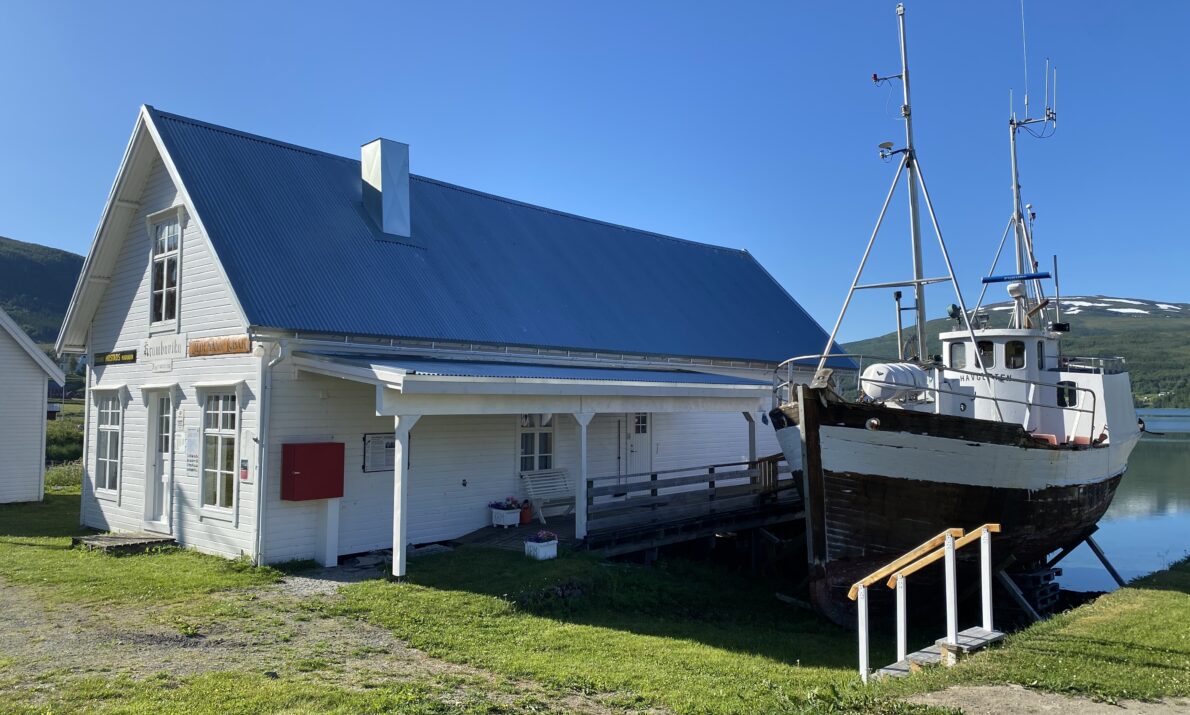
Photo: Fotefar mot nord
Water gives crops - life shapes the landscape.
Along Åelva we find several memories from the old farming, including the mill on Å, Oddveig's summer barn and the forge on Neset. These are buildings that tell the story of the everyday life of the people on Å in the old days. The cultural trail runs between Fjellkysten Hotel and Kramvikbrygga Museum and takes you through a beautiful cultural landscape.
Practical info
Practical info
Opening hours
The trail is always open. Krambuvika Village Museum is open on request
At Fjellkysten Hotel you can buy food and drinks
Parking
It is possible to park at the museum or at Fjellkysten Hotel
Toilet
At the museum when it is open
How to get here
By car:
Exit the E6 at Fossbakken and drive towards Tennevoll and on towards Soløy.
Hiking information
Walk from Krambuvika Village Museum along the road at Soløy and then on the trail up along the Åelva towards Fjellkysten Hotel. Alternatively the opposite way.
Accessibility
Accessibility
Parts of the trail run along a road that is accessible by wheelchair and stroller.
The river in Å was the lifeblood of the people who settled here. Today we can hardly understand how important such a river was. Everyone had to come here to fetch water for people and livestock, and here they washed clothes. Along the river there was plenty of forest and fertile soil. The gentle slopes to the south provided early spring and good grazing. The fjord provided fish all year round, and the road to the church at Ibestad was short.
The cultural environment at Å
The land on the Å farm has been cultivated for generations, and many introduced species have become part of the local flora. Åelva starts at Lavangseidet and is fed by mountain streams. In the estuary at the shore, there are therefore plants that belong to the mountain flora. The cultural monuments along Åelva tell a lot about life in the time before tractors, milking machines and bread bought from farmers. From the time when people made their own horseshoes, scythes and nails. Back then, there was a lot of activity with people living and working in what we now see as quiet buildings. This was part of their everyday life. Back then, the sound of the mill, the roar of the summer barn and the hammering of the forge could be heard throughout the area. The cultural trail takes us back to that time.
Memories of the war
On April 17, 1940, the entire Trønder Battalion arrived in Lavangen. Here they were accommodated in private houses before being sent into battle on Gratangsfjellet. On the night of April 25, the Norwegians were attacked by the Germans, and the result was catastrophic: 34 men were killed, 61 wounded and 174 were captured by the Germans. The survivors managed to get back to Lavangen, and were again accommodated in private houses. It was a strong experience for the people here to get all these wounded, shocked and badly injured young men back into their houses. The memories of this are still alive on Å.
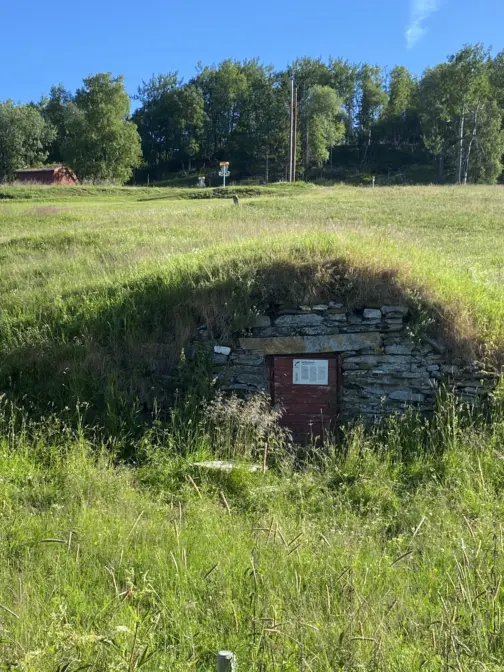
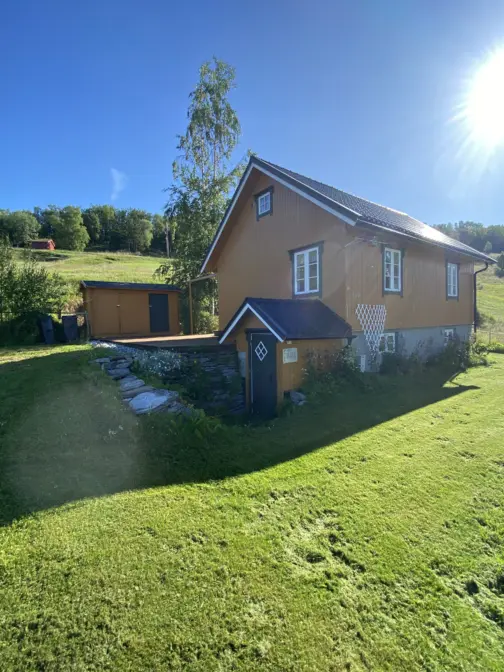
Cultural monuments along the trail
The mill on Å is a reconstruction of an original stream mill. Here the farmer ground his own grain.
Oddveig's summer barn. In the division between the inland and outland there used to be a number of summer barns, one for each farm. Oddveig's has been restored, the others we can only see the ruins of.
The forge on Nesset was a farm forge where the farmer made what was needed on the farm, such as horseshoes, scythe blades, fittings, nails and hooks.
Underground cellar. This type of stone and turf building is excellent for storing potatoes and other vegetables.
The butter house dates from before the time of the dairies, from here butter was sold to the public.
Krambuvika was formerly a "krambu" with a post office. There is also a net wharf, a boathouse, a hut and a homestead. Krambuvika is one of the facilities of the Sør-Troms Museum.
