

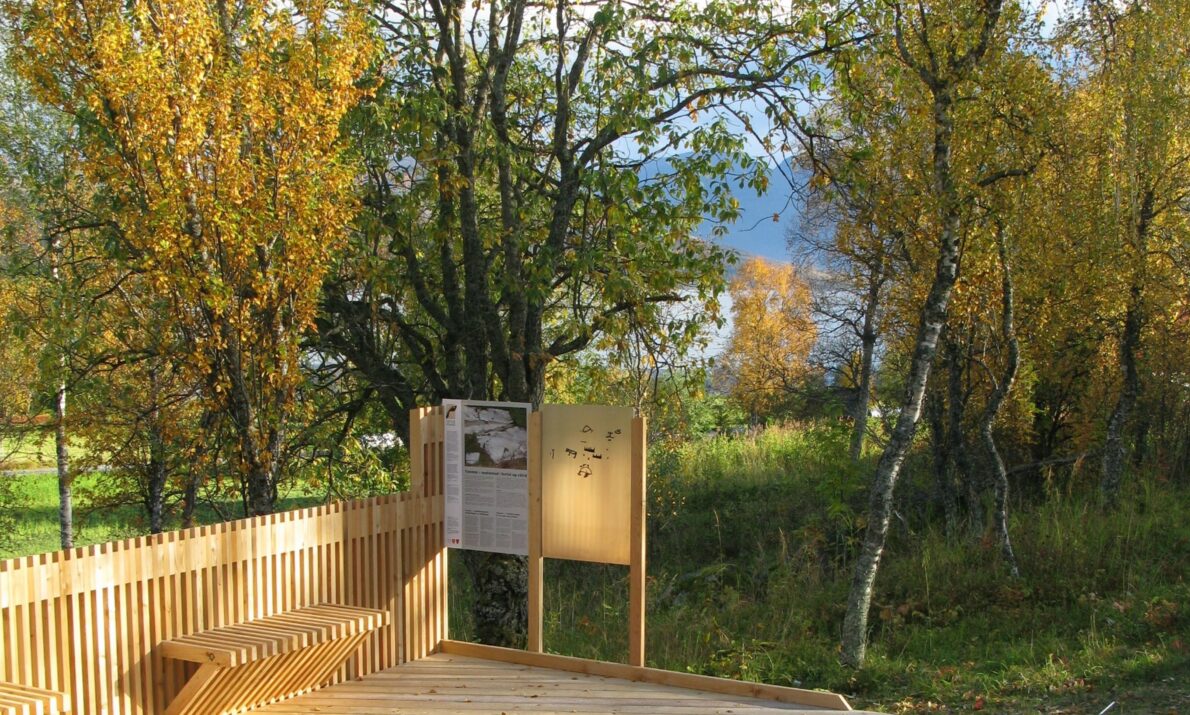
Photo: Marit Chruickshank, Troms fylkeskommune
A gathering place—past and present.
Four rock art sites are located at Tennes. This is the largest collection of rock art in Troms. The cultural heritage sites span a period of more than 6,000 years. The cultural trail leads you through the landscape that people have used and left their mark on throughout this entire period.
Practical info
Practical info
Opening hours
Outdoor area. Always open
The rock carvings are best seen in slanting sunlight in the morning or afternoon, or with artificial light in the dark. At Kirkely, the petroglyphs are illuminated. Turn on the light switch on the railing and see how reindeer, porpoises and boats come out more clearly on the rock
Parking
Parking at Gråberget and at Tennes church
Toilet
No
How to get here
Take the exit from E6 at Tømmerelv (towards Storsteinnes) follow FV 858 (Strandveien) and 8590 (Tennesveien) to Tennes
Other
The cultural monuments are automatically protected under the Cultural Monuments Act.
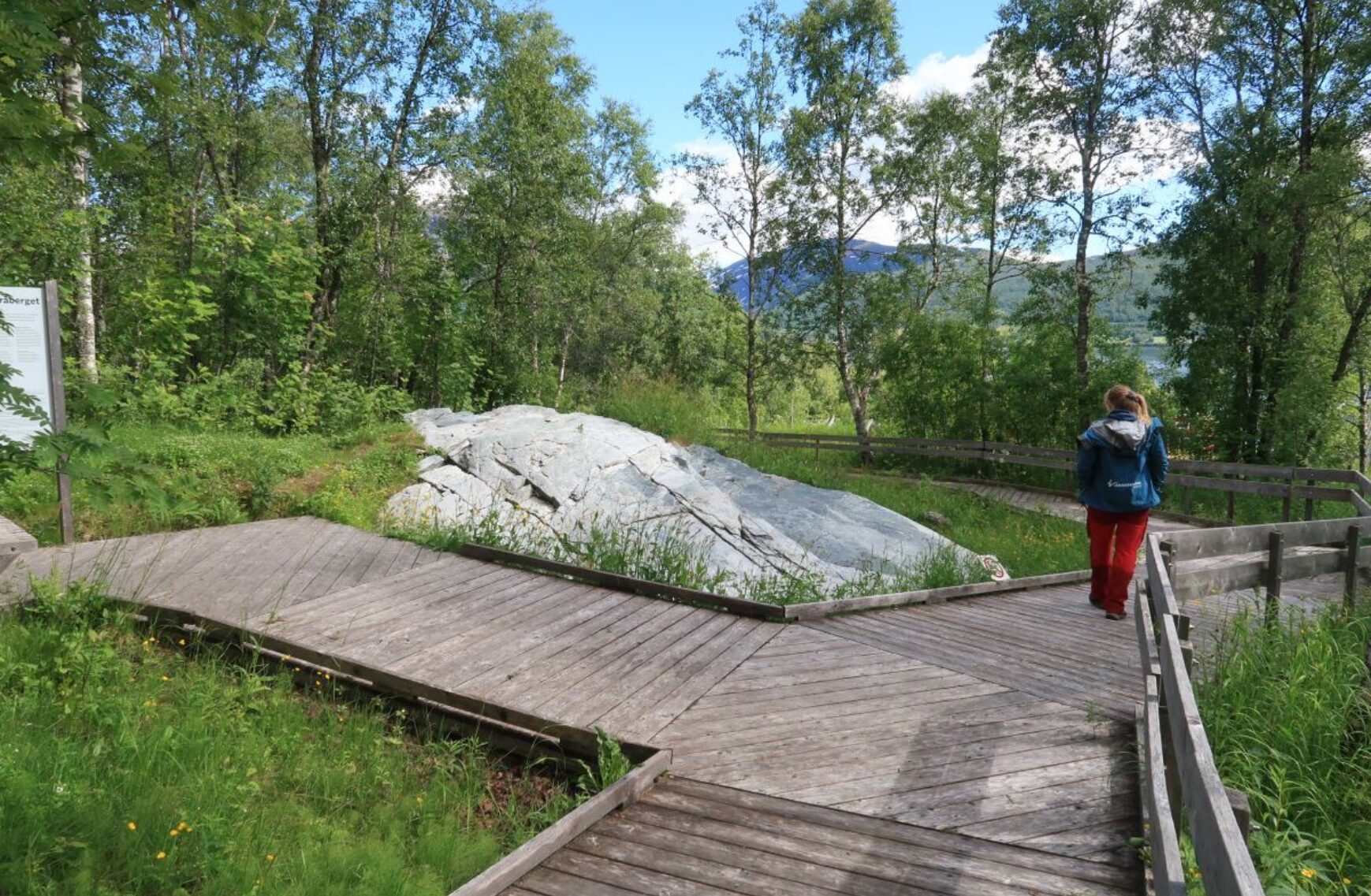
The rock is shaly sandstone and vulnerable - do not step on the rocks. Help us preserve the petroglyphs!
Accessibility
Accessibility
The pathways to all three rock art sites are universally designed and accessible to people with disabilities. There are several benches for resting along the paths and at each of the rock art sites. At the Kirkely site, information is also adapted for the visually impaired through signs featuring engraved rock art figures.
The Kirkely, Bukkhammaren, and Gråberget sites feature parking, paths accessible to people with disabilities, information signs, and resting areas. A marked trail runs through the forest between Kirkely and Bukkhammaren; halfway along, there is a rest area offering a lovely view of the mountains and Balsfjorden. For a unique experience, visit the rock art at Kirkely during the autumn darkness; the illumination of the rock carvings creates a distinctive atmosphere.
What do the figures tell us?
Tennes was the first administrative center of Balsfjord, established in 1856, featuring a church, a parsonage, a steamship terminal, and the local sheriff’s office. In the past, this was a site for ritual gatherings.
The rock carvings offer a glimpse into the worldview of Stone Age people—their beliefs and rituals. Rock art is a language without words. We do not know for certain how to interpret this visual language. Do the animal figures symbolize a wish for a successful hunt, or might the images represent something entirely different from what they literally depict? Do images of reindeer and porpoises represent game, or do the figures show mythological beings? Does the human figure depict a satisfied hunter, represent a god, or portray a shaman performing rituals? Could the boats be fishing vessels or trading craft, or might they symbolize the journey to the realm of the dead or the sun’s path across the sky?
Dating
Some of the rock carvings at the Kirkely site are heavily worn by the water and gravel that have washed over them for decades. In the same area, there are figures that appear freshly carved; every tool mark is clearly visible. This indicates that the rock face into which the carvings were cut was originally located at the water's edge. For a long time, the sea washed over the rock, abrading the figures. Subsequently, new carvings were created at the same location, but these were covered by beach gravel shortly after being made—possibly due to a severe storm surge.
Today, the Kirkely site lies 16 meters above sea level. Based on shoreline dating, the carvings at Kirkely date back to 4,900 BC.
The three rock carving sites are situated some distance apart and at varying elevations above current sea level. We assume that the site located highest above sea level (Bukkhammaren) is the oldest.
