

Photo: Kristin Foosnæs, Finnmárkku fylkkagielda
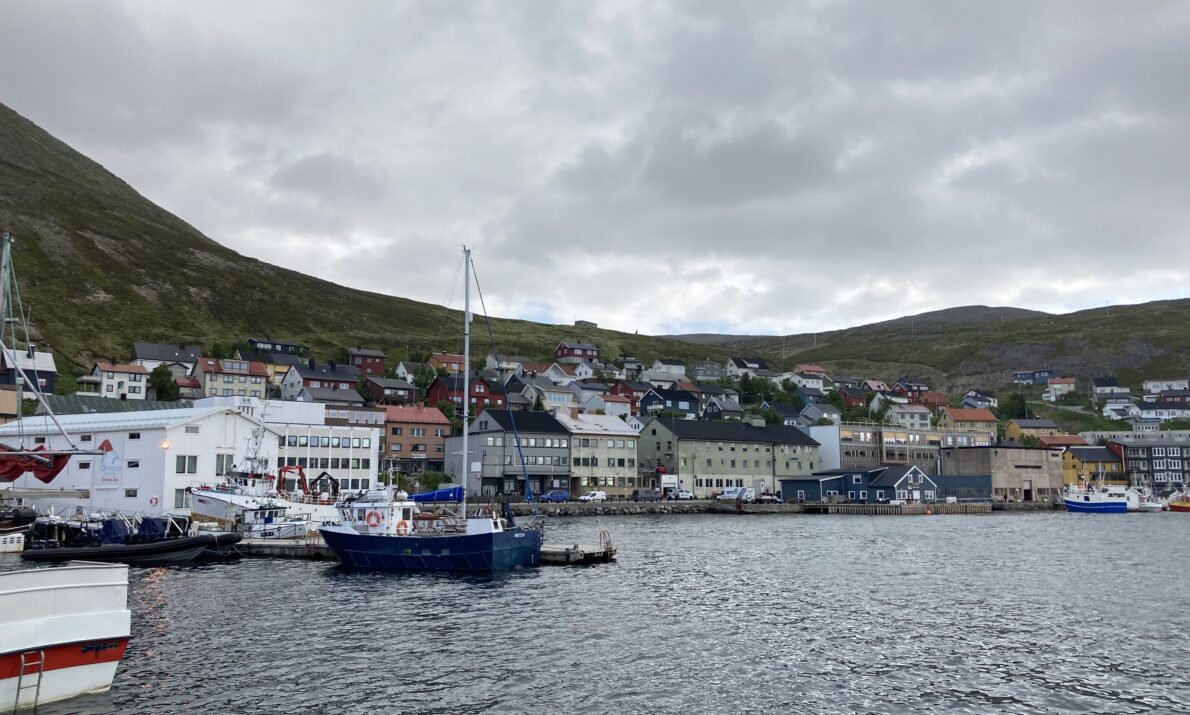
A walk through the streets of Honningsvåg provides a good insight into the typical reconstruction architecture, from the time after World War II when cities and towns were rebuilt.
Practical info
Practical info
Opening hours
Always accessible
Facilities
Honningsvåg city center has several hotels, restaurants and good parking facilities
How to get here
By car, plane or Hurtigruten
Accessibility
Accessibility
The city streets are easily accessible in the summer, and are child-friendly.
A walk through a rebuilt city
Today's buildings in Honningsvåg city centre, like most cities and towns in North Troms and Finnmark, have a history of just under 80 years. When the German occupiers left the place at the turn of 1944/1945, only the church remained. The rest of the buildings had been reduced to ashes and the population was forcibly evacuated.
The traces of centuries of building tradition had been lost. The reconstruction after the war gave the place a completely new appearance. The buildings that were built on the ruins stand today as the physical result of the joint efforts of the population and the authorities to get the region back on its feet.
Honningsvåg has largely retained its distinctive character from the reconstruction, and today appears as a direct result of the zoning plan prepared by the "Burnt Places Regulation (BSR)" in 1947. Almost all available land was developed within a few years.
If you take a tour of the city streets, you will be able to see, among other things, the listed service stations along the shore, the town hall and the gymnasium, and so-called prize houses among the homes in Klubben.
You can also learn more about the reconstruction of Honningsvåg at the Nordkapp Museum, which is located centrally in the city.
