
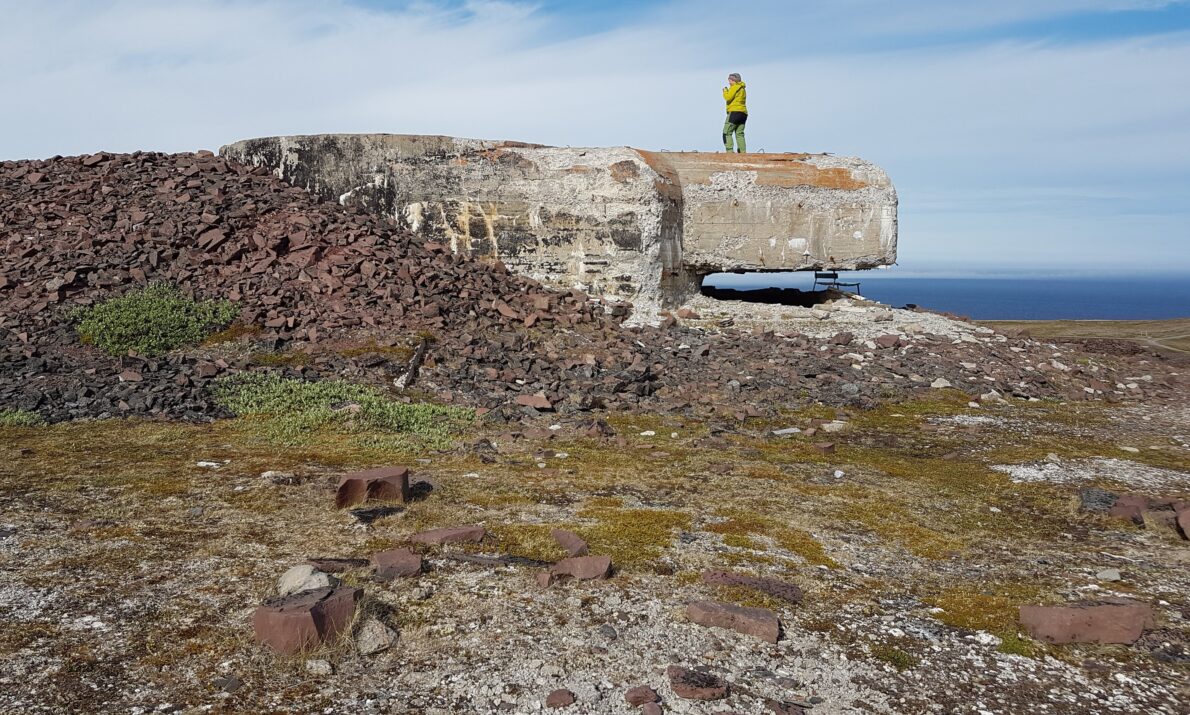
Kibergneset.
Photo: Synnøve Thingnæs, Finnmárku fylkkagielda
Kiberg has a unique war history. At Kibergsneset, the German occupation forces built their largest coastal battery in Finnmark. At the same time, over half of the partisans who fought on the side of the Soviet Union and the Allies came from here.
Practical info
Practical info
Opening hours
The outdoor areas are always open, but the fort should be visited during the bare-ground season. The Partisan Museum is open during the summer months every day from 9 am to 6 pm, from 8 May to 25 October
Parking
Parking in the village by the quay or in Idrettsveien by the Infopoint for Varangerhalvøya National Park
Toilet
At the museum when it is open
How to get here
Kiberg is located along the E75, approx. 13 km before Vardø if you are driving from Vadsø. There are buses from both Vardø and Vadsø to Kiberg.
Other
Tour description Perletur
Homepage Partisanmuseet
Accessibility
Accessibility
The path up to Kibergsneset Fort is easy to walk, but with a slope. It can be wheeled and cycled. Children and dogs must be supervised, as there is a risk of falling from great heights in some places on the fort.
The partisans and the war
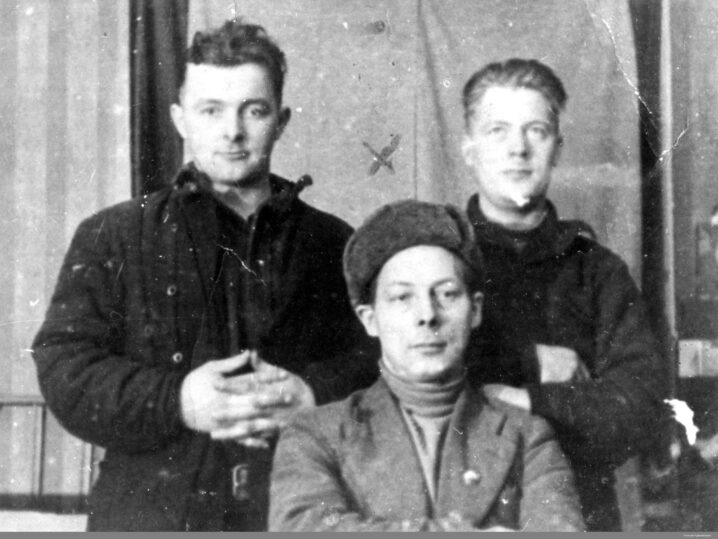
Before the war, communism was strong in the village, which contributed to over 60 Kiberg residents fleeing to the Soviet Union when the occupation began. 26 returned as partisans and participated in intelligence against German targets.
Submarines and parachutes were used to smuggle the partisan groups into the country. They hid in makeshift shelters, monitored the shipping lanes and sent messages to Murmansk. The reports contributed to the sinking of up to 120 German vessels and to the reduction of the supply of soldiers and material to the Eastern Front.
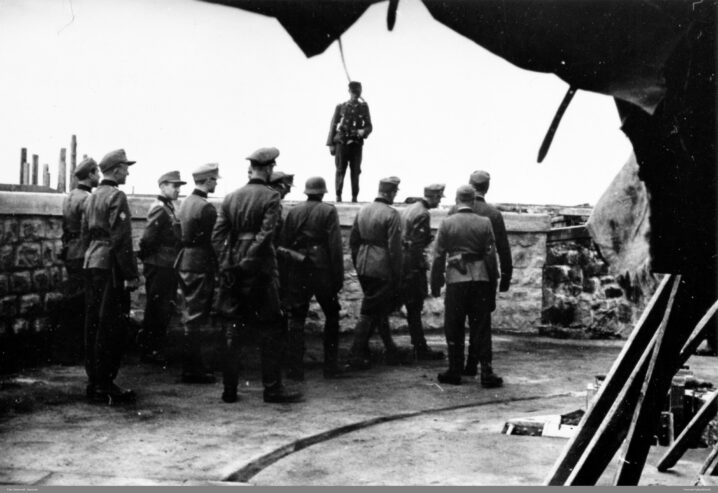
The effort was risky, and the groups depended on local contacts to carry out their mission. The resistance movement was exposed by the occupying forces in 1943, and both civilians and partisans were executed. 40 people in the service were killed – 17 from Kiberg. After the war, many were met with suspicion, especially during the Cold War, and official recognition did not come until 1992, when King Harald gave a speech of thanks at the partisan monument in Kiberg.
Kibergsneset Fort
Fort Kiberg was established by German forces shortly after the occupation of Finnmark in 1940 and developed into the largest coastal battery in the county. Construction began in the fall of 1941, probably on Hitler's own instructions. Over time, the facility grew into an extensive system of mountain structures, bunkers and gun emplacements manned by around 700 soldiers. The work was first done by Norwegian contractors, later by Russian prisoners of war.
The fort was in combat several times, most recently in 1944, and was blown up and abandoned on October 29 of that year when the Germans withdrew. The inhabitants had largely evacuated the area by then, but returned quickly after the withdrawal. Large quantities of provisions that the Germans did not have time to destroy made the first peace harvest easier for the Kiberg soldiers.
Today, many of the main structures are still visible: large bunkers, the mountain structures, remains of trenches, foundations for cannons and the monumental command center at the top.
Visit Kiberg and Kibergsnes
In Kiberg you can visit the Partisan Museum, and you can walk around the village and see the pre-war settlement, with several protected and listed buildings. From the village there is a hiking trail up to Kibergsneset fort. Please note that it can be dangerous to go outside the marked trail. Children and dogs must be supervised. It is not permitted to remove anything from the facility.
