
Photo: Finnmark Friluftsråd
During World War II, a military hospital – a so-called field hospital – was built in Skoganvarre. The hospital was to serve the German army forces in Finnmark and northern Finland. Lasarettmoen has been located approximately as it was abandoned in the autumn of 1944, after the German army set fire to everything flammable and blew up parts of the facility in its retreat from Finnmark.
Practical info
Practical info
Opening hours
Outdoor recreation area, open 24 hours a day
Parking
Parking lot next to E6, with information signs at the start of the hiking trail.
Toilet
Not equipped with a toilet or picnic area
Accommodation
Overnight stay is possible during the summer months at a campsite in Skoganvarre
How to get here
Fotefaret is located along the E6 between Lakselv and Karasjok, 30 kilometers south of Lakselv.
Other offers and opportunities
Lasarettmoen is also registered as a Perletur
Be careful
You will also find remains of the hospital outside the designated area. Please note that it is dangerous to walk outside the trails. There are objects around the area that could cause harm, and pits that are difficult to see. Small children and dogs must be supervised. It is not permitted to move or remove objects from the facility.
Accessibility
Accessibility
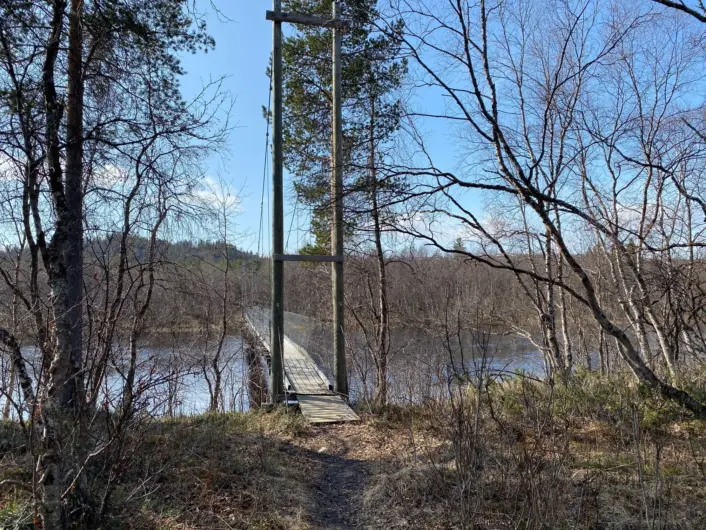
The trail is not universally designed. The start is a bit demanding, with a steep hill and a suspension bridge. The rest of the trail is easy to walk. Children must be supervised.
The occupying forces' field hospital
The field hospital in Skoganvarre became an important place for the treatment of injured soldiers, and for recreation. The location was important, in connection with all-year roads to, among other places, Kirkenes and south to Finland.
The construction took place using Norwegian workers and companies, the German army and their prisoners of war. The hospital was called Ortslazarett Skoganvarre by the Germans. Here there was a medical and a surgical department with an X-ray room, in addition to a recreation department, kitchen barracks, doctor's quarters, laundry barracks and a car repair shop. The doctors at the hospital were German, and the nurses were from the German Red Cross.
Traces of the hospital
If you follow the path from the parking lot and take the suspension bridge over the river, you will enter the hospital area, which has been almost untouched since the days of the war. When the facility was abandoned in 1944, there were a total of four larger barracks and a number of other smaller buildings here. There is also a 60-meter-long shelter that was connected to the barracks through underground passages.
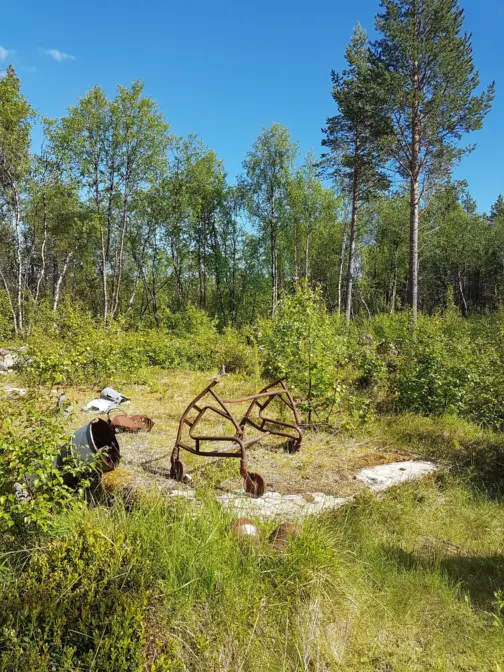
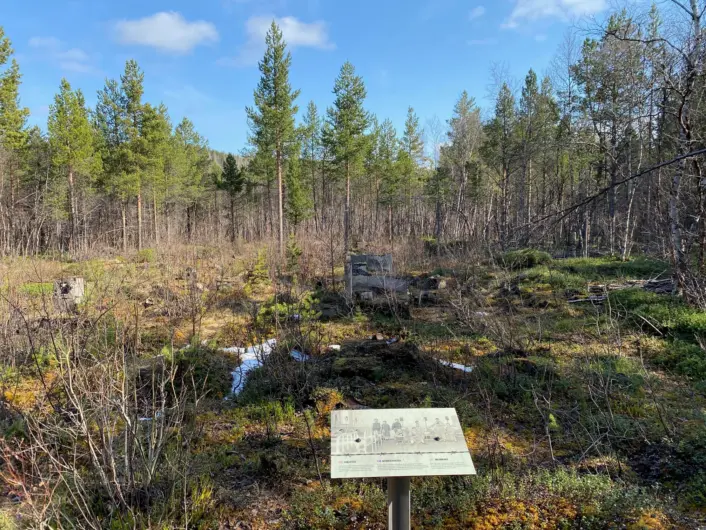
Today, Lasarettmoen is open to visitors and parts of the road system inside the area are accessible on foot. From an approximately 600-meter-long two-part trail, you can see the earthen embankments where the barracks stood, and within these are remains of, among other things, beds, stoves, pipes and building remains.