
Photo: Hasvik kommune
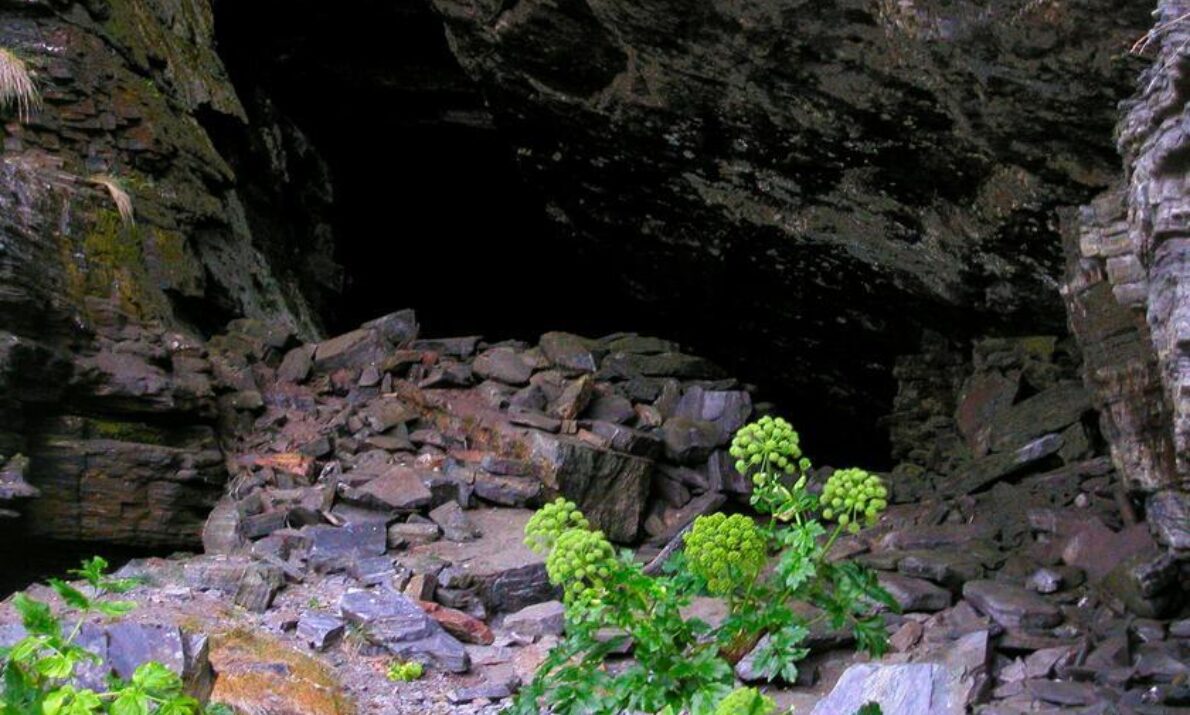
Nordsandfjordhula is located in the Nordsandfjorden nature reserve on Sørøya. The cave was a hiding place for 133 people during the evacuation in the autumn of 1944. Entire families made their way here, and the residents organized themselves into a small community until they were discovered and transported out.
Practical info
Practical info
Opening hours
Available during the summer months
Parking
Parking along county road 882
Toilet
No
How to get here
To visit Nordandfjordhula, drive county road 882 from Hasvik past Breivikbotn to Sandvika. There is an information board and parking lot. Then you have to walk about 5 km.
Additional information
Nordsandfjordhula is located within the Nordsandfjorden nature reserve. It is therefore not permitted to light a fire or collect dry wood within the conservation area.
About Nordsandfjordhula Nordsandfjordhula - Hasvik Kommune
About Nordsandfjorden nature reserve Nordsandfjorden naturreservat - Hasvik Kommune
About the hiking trail 18. Nordsandfjorden
Fotefar booklet: Øyfolket i hulene : evakueringshøsten 1944 : Nordsandfjordhula
Accessibility
Accessibility
The trail from the parking lot to the cave is about 5 km long. It is easy terrain all the way to the beach. Note that the last part to and from the cave is only accessible at low tide, so plan your trip carefully!
On the last part of the route along the shore, the rocks are slippery and covered with seaweed, and they can be slippery to walk on. The cave is located about 30 meters from the sea. The entrance faces the sea and can be difficult to find.
Evacuation in the autumn of 1944
After eastern Finnmark was liberated by Soviet forces in the autumn of 1944, Hitler ordered the evacuation of Finnmark, followed by systematic burning. The order created fear and disbelief among the population. Many witnessed their homes go up in flames and livestock being slaughtered.
Around 49,000 Finnmark residents were forcibly evacuated south, while around 23,000 chose to stay. Many of them defied the evacuation order and fled into the mountains, fearing what would happen if they were forcibly evacuated. Many had heard the call from London that people should not be forcibly evacuated, but instead hide until the Germans had left the area. Most believed that it was only a matter of days or weeks before they would be liberated by the Allies.
The refugees on Sørøya
With its steep mountains and many secluded caves, Sørøya was a suitable area for hiding. At most, around 1,000 refugees lived around the island. Most of them had ties to Sørøya, but refugees also came here from other parts of the western county.
From the end of October, people lived a barren life as outlaws on their own island, constantly on guard against an enemy. A few hundred were discovered, captured by the Germans and sent south. Some made it to the liberated Finnmark in the east. In February 1945, 502 people were picked up and transported to Scotland. Refugees hid around Sørøya until the peace days in May 1945.
The hiding place in Nordsandfjordhula
Nordsandfjordhula was a hiding place for 133 people in the autumn of 1944. The youngest was only seven weeks old. During their stay, a child was also born here. The families divided their area with tarpaulins and tents that were attached to the cave walls. Living conditions were primitive, and water trickled from the walls. Although countless Primus stoves were burning night and day, it was almost never warm inside the cave.
A continuous guard was kept outside the cave, but on the morning of November 12, the alarm was raised. A fishing vessel with German soldiers on board came towards the cave, probably piloted by a local acquaintance. The hiding place was revealed, and the cave dwellers were forcibly transported from there.
The cave entrance is well hidden, and access to the cave is via the sea side, on foot only when the tide is low. The cave has an entrance of about 40 meters deep, then it splits into two, where you can walk more than 100 meters into each cave passage.
When visiting the cave, you will be able to see, among other things, the remains of the toilet area at the entrance, and see traces of abandoned objects. Show respect and leave everything behind.
