

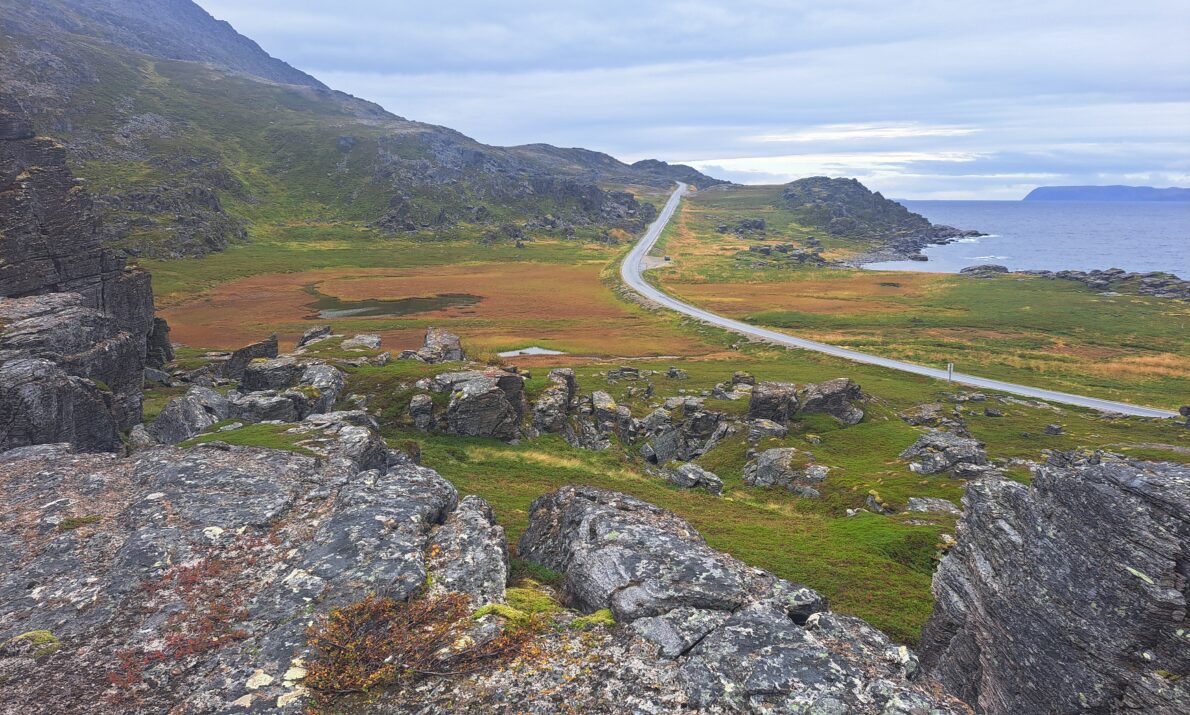
Overview of the entire cultural heritage area Selvika
Photo: Synnøve Thingnæs, Finnmark fylkeskommune
The cultural heritage area in Selvika is easily accessible along the national road. The hiking area provides an opportunity to explore archaeological cultural heritage from different time periods. The settlement in the cove extends over a period of 6000 years, and the changes in the settlements here have occurred in step with the changes in the landscape.
Practical info
Practical info
Opening hours
Outdoor area, open 24 hours a day.
Parking
Parking up to RV 889.
Toilet
A universal toilet is available at the Selvika rest area 1 km in the direction of Havøysund.
How to get here
The cultural heritage area is only accessible by car, and is located along RV 889 approximately 15 kilometers from Havøysund.
Accessibility
Accessibility
The hiking trail is laid out in easy terrain, but it is not adapted for wheelchairs or strollers.
Settlements by the sea
It is from the Neolithic Age that we find the first traces of past life in Selvika in the form of around 40 house foundations and foundations of boathouses. At that time the climate was milder than today. The sea was approx. 10-15 meters higher than today's sea level and the land area was covered in birch forests and pine. The wildlife was rich, with forest animals such as moose, bears and beavers. What is now a marshy area with hills and rocks was once a warm cove, well sheltered by an island that can now be seen as a mound in the landscape. The first people to settle here had relatively small houses. The houses were dug into the ground and were up to 10 m2 in size. The walls were built of peat piled on top of each other. Gradually, the houses changed shape and size, which can be discovered when following the path.
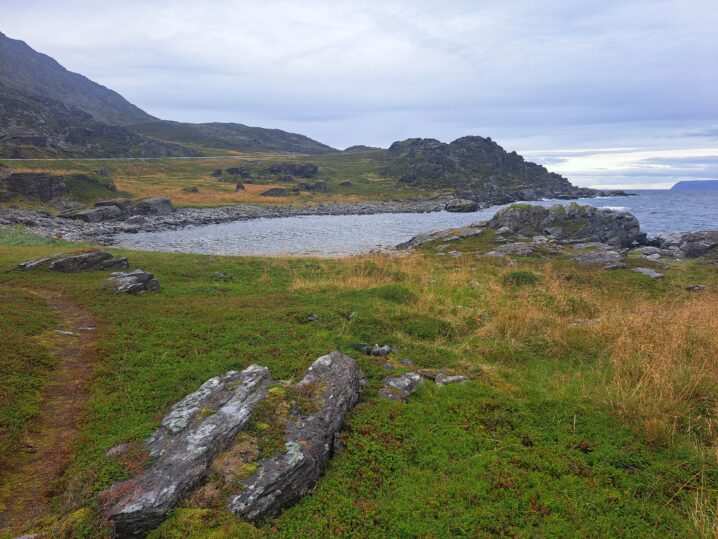
Changing landscape
As time went on, the sea slowly approached today's level. The climate became cooler and the landscape slowly took on its current appearance. The forest retreated from the coast and the former sea basin became marsh. The Stone Age settlement, which was originally located near the beach, was gradually abandoned; people moved after the sea. In the Iron Age/Middle Ages (c. 500 BC-1500 AD), the settlement was located almost next to today's beach zone. Remains from the Iron Age settlement are mostly seen in the form of rock pits and boathouses. The pits were used to extract oil from marine mammals.
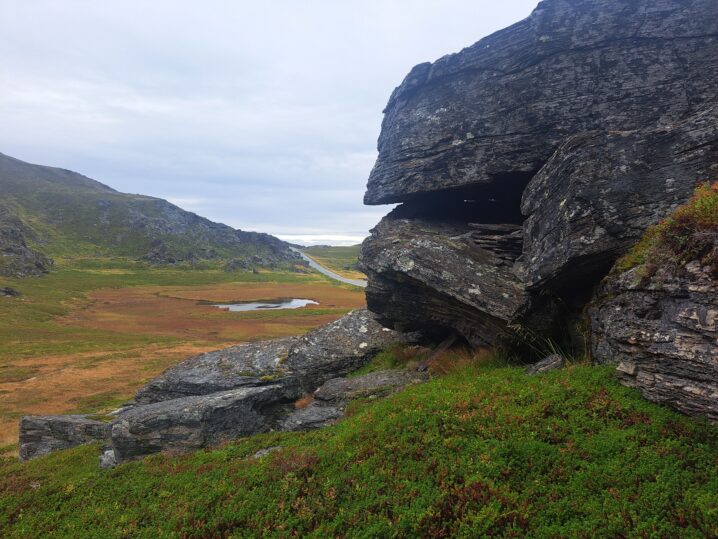
Visit the cultural monuments
Selvika is located along RV 889 about 15 km before reaching Havøysund. The cultural monuments are located in a popular hiking area and the site is prepared for visitors with paths and a campfire site.
The landscape is vulnerable, and in order to prevent damage to the cultural monuments, we encourage visitors to be careful and follow the hiking trails. All cultural monuments are protected under the Cultural Monuments Act.
The Selvika cultural monument area is undergoing renovation, and new signs and markings are coming.
