
Photo: Sør-Troms museum
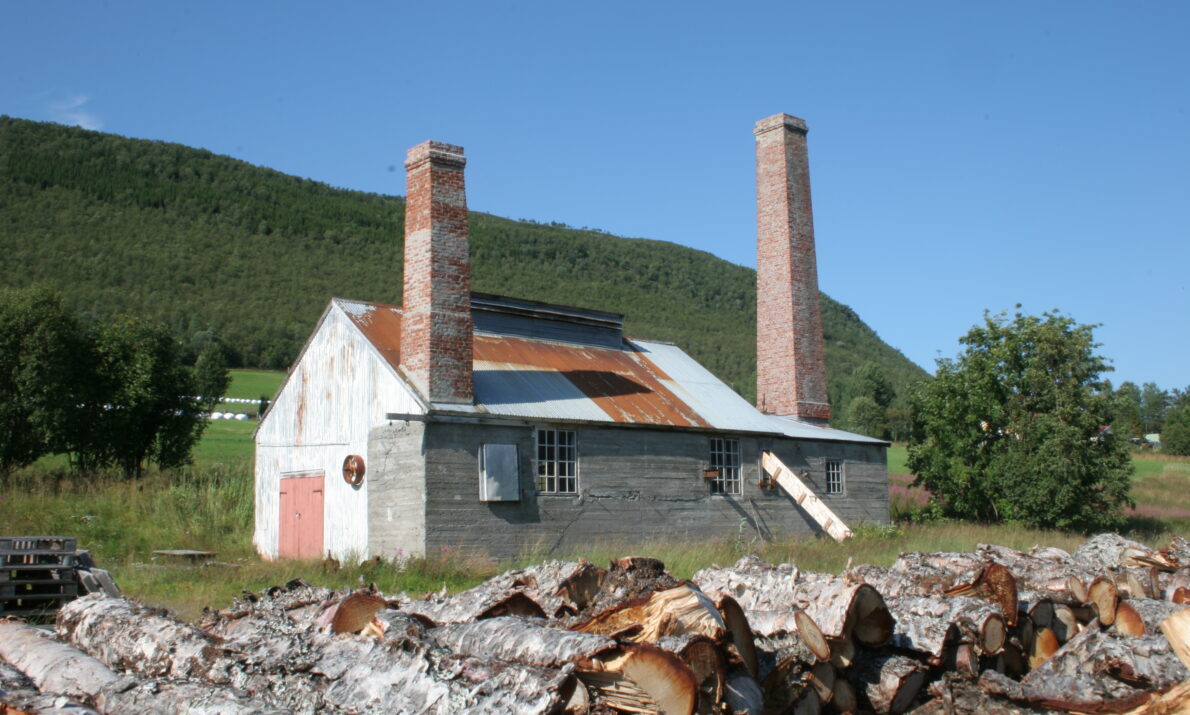
A/S Skjærstad Sildoljefabrikk was established in 1922 and operated until 1928. Today, it is Norway’s only complete herring oil factory from that era and a national technical-industrial heritage site. The facility was designed by engineer Agnar Kaarbø, who developed the unique "Kaarbø press"—a combined cooking and pressing unit that enabled continuous operation. Powered by a 17 hp steam engine, the factory had a daily capacity of 450 hectoliters and was staffed by a crew of five. The oil was filled into 200-liter oak barrels, while the herring meal was packed into 100 kg burlap sacks. Operations were seasonal, running from September to Christmas, with the factory operating at full capacity only in 1926 and 1928.
Today, the herring oil factory is one of the sites managed by the Sør-Troms Museum.
Practical info
Practical info
Opening hours
Open upon request: booking@stmu.no, tel. 77 01 83 80
Parking
Yes
Restrooms
No
How to get here
From Harstad town centre, follow Road 8670 to Ervika, and from there follow Road 7740 to Kasfjorden and Skjerstad.
Accessibility
Accessibility
Not easily accessible for wheelchair users
Herring fishing
Herring fishing has a long tradition along the coast. In the late 19th century, new gear and methods led to significant growth in the fisheries; this proved crucial for coastal communities and laid the foundation for industrial development. Previously, entrails and heads were boiled down to produce lamp oil. During periods of massive catches, herring was used as fertilizer.
Over time, fishmeal became an important export product for animal feed. Improved processing methods enhanced the quality of herring oil, allowing it to be used in food production—including margarine and canned goods. What began as the utilization of by-products evolved into the most valuable segment of the herring industry.
The Herring Oil Factory
The facility was designed by engineer Agnar Kaarbø, who developed the unique "Kaarbø press"—a combined cooking and pressing unit that enabled continuous operation. Powered by a 17 hp steam engine, the factory had a daily capacity of 450 hectoliters and was operated by a crew of five. The oil was filled into 200-liter oak barrels, while the herring meal was packed into 100 kg burlap sacks. Operations were seasonal, running from September to Christmas, and the factory operated at full capacity only in 1926 and 1928.
