
Photo: Petr Pavl
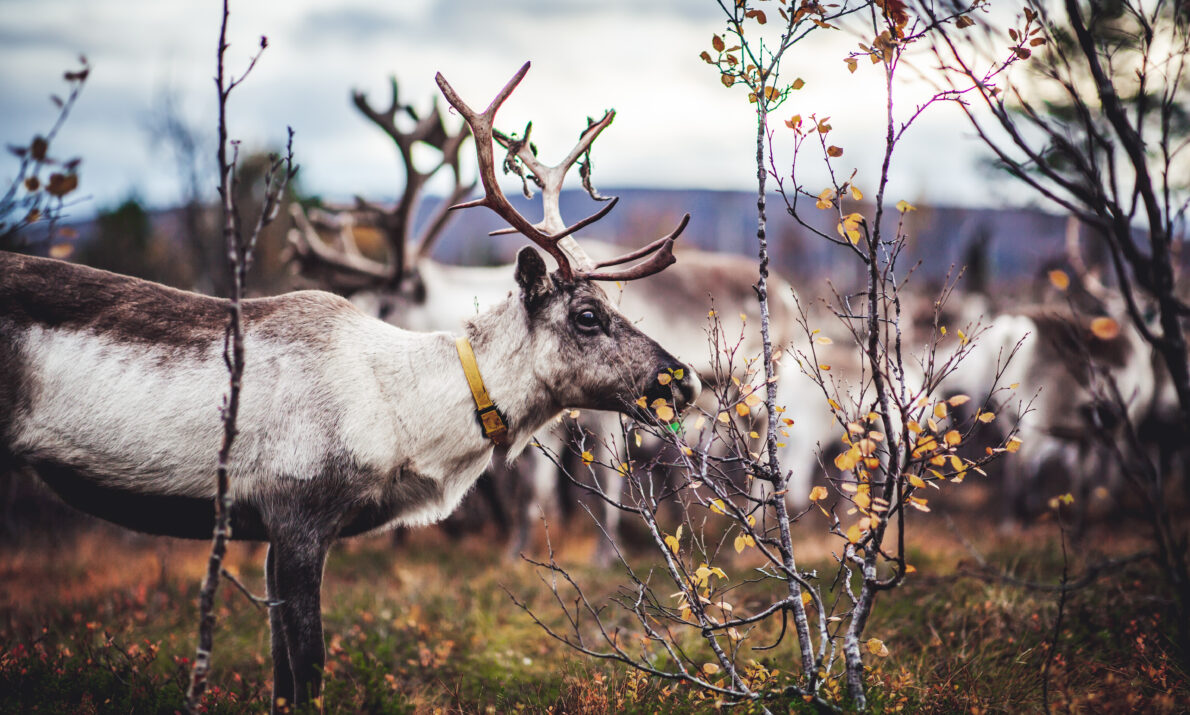
With the Reindeer Herd from Karesuando to Lyngen.
For centuries, the Lyngen Peninsula has been an important area for reindeer herding and Sámi culture. In places like Eidebakken, Swedish reindeer-herding Sámi have utilized summer pastures for their herds. The area is known for its lush valleys and excellent grazing conditions, making it attractive to migratory herders who had winter pastures in Sweden and Finland.
Practical info
Practical info
Opening hours
Outdoor and always open
Parking
Yes
Restroom
No
How to get here
From Lyngseidet, follow County Road 91 for approximately 1.5 km. Parking is on the left side of the road. Eidebakken is located on the right.
Accessibility
Accessibility
Not wheelchair accessible
From wild reindeer to domesticated reindeer
Historically, reindeer were a wild resource that was hunted, but over time, the Sámi developed a system of reindeer herding. This provided greater control over the animals and ensured a supply of food and a means of transport. The summer migration to the Lyngen Peninsula was part of this tradition, involving the herding of reindeer from inland winter pastures to coastal areas with lush vegetation.
Border dispute and the Lapp Codicil
During the 18th century, the borders between Norway, Sweden, and Finland were established, and conflicts regarding grazing rights arose. The so-called Lapp Codicil of 1751 secured the Sami people's right to cross the borders with reindeer—an arrangement that lasted for several centuries. Nevertheless, border changes and political decisions created challenges for reindeer herding, particularly after the turn of the 20th century.
Reindeer grazing areas and nature
The Lyngen Peninsula offers a varied landscape of mountains, valleys, and lush meadows. Areas such as Njallavárri and Goalsevarri provided particularly good summer grazing; here, reindeer herds could graze on grassy plains, and in the 1870s, it was estimated that up to 3,000 reindeer grazed in the area during the summer.
Migration routes and life at the summer camp
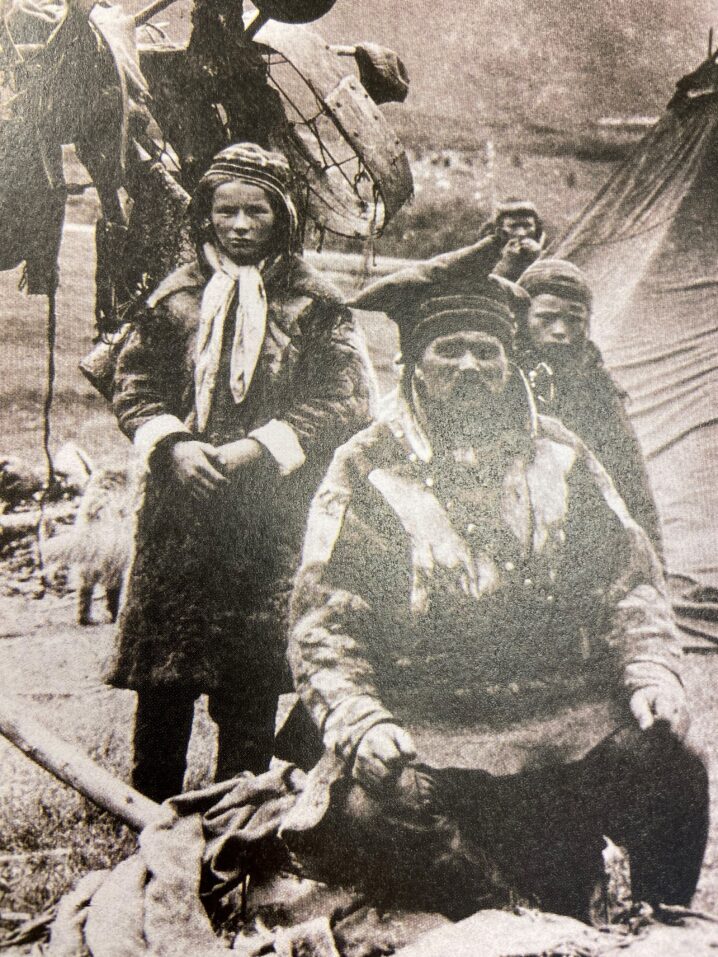
The move from Karesuando to Lyngen was a demanding journey. The reindeer herds were led by a *bielloboazu* (lead reindeer), and sledges carrying equipment were transported to the summer grounds. Along the way, the herd had to be protected from predators and provided with extra feed. The summer camps consisted of turf huts, tents, and *lavvos* (traditional Sami tents). The turf hut was the most common type of dwelling at Eidebakken in the early 20th century, constructed from birch logs, birch bark, and turf.
Trade and social interaction
The summer settlements also served as meeting places for trade and social interaction. The local population and the Sámi people exchanged goods such as butter, meat, and hides. People rowed in from Nordnes to sell their wares, while the Sámi purchased flour and coffee from Sweden. It was common to cook porridge and eat it with reindeer milk—an important part of the culinary culture.
Turistattraksjon på Eidebakken
In the late 19th century, Eidebakken became a popular tourist attraction. Tourist ships bound for the North Cape docked at Lyngseidet, and visitors came to experience Sami culture and reindeer. King Oscar II visited the site in 1903, and tourists were fascinated by life in the summer camp. This created a unique blend of tradition and modern tourism.
A living cultural heritage
The history of reindeer herding on the Lyngen Peninsula is a story of adaptation, culture, and nature. From ancient migration routes to the present-day traces of turf huts and campsites, the area offers a glimpse into a way of life that has shaped Northern Troms for centuries. For today’s visitors, the Lyngen Peninsula is not only a scenic destination but also a place where one can experience traces of Sámi cultural heritage.
