
Photo: Kristin Foosnæs, Finnmárkku fylkkagielda
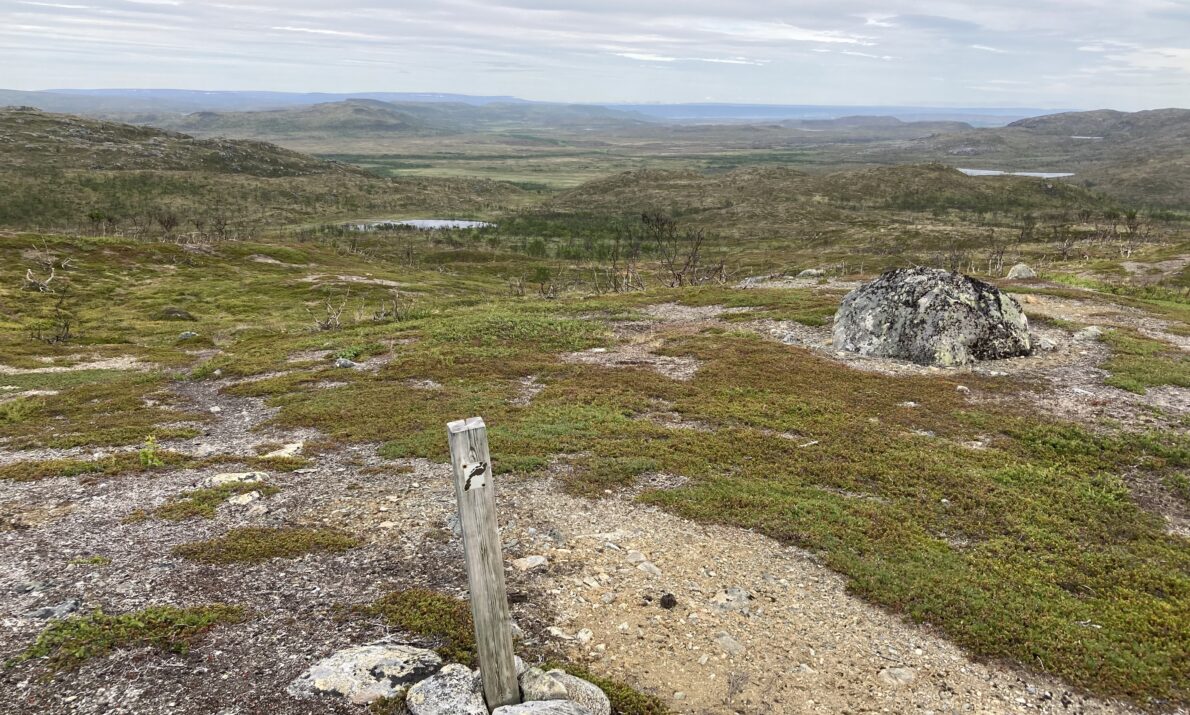
Along the cultural heritage trail in Gollevárri in Tana municipality, you can find traces of prehistoric wild reindeer hunting. The hunting facility here is the largest in Finnmark, with several hundred hunting pits arranged in rows.
Practical info
Practical info
Opening hours
The trail is always open
Parking
There is a parking lot at the start of the trail, along national road 895, approx. 7 km south of Skiippagurra
Toilet
No
How to get here
By car:
Follow E6 and enter national road 895 towards Finland. Follow RV895 for approx. 6 km. You will see a parking lot on the left side of the road (when driving towards Finland) – this is where the cultural trail starts.
About the trail
The trail is approx. 6 km long, in places it is steep and rough terrain. Wear good shoes, as it can be a bit damp in some places
For a description of the trail, see Perletur 10. Gollevárri cultural heritage site
Accessibility
Accessibility
The trail is not wheelchair accessible
Wild reindeer hunting in Gollevárri
Wild reindeer migrated every spring and autumn between summer pastures on the Varanger Peninsula and winter pastures inland. The reindeer then passed the isthmus between Varangerbotn in the east and the Tana River in the west. Across the migration route, people built a large hunting facility, probably during the period we call the Sami Iron Age. Even today, several hundred years after the wild reindeer have disappeared and the facility has fallen into disuse, the hunting pits can still be seen as long rows in the field.
Near the trapping facility you will find the remains of stone-lined pits, meat caches, where the meat was stored during the hunt. The people who used and supervised the facility had their seasonal residence on a small hill south of the trapping facility. Today, the traces of these pits are faintly visible as low grass mounds.
By following the marked trail you will experience these cultural monuments. After you have left the national road and come a little further into the valley, you will pass the trapping facility. Both east and west you will see rows of trapping pits, which are over 500 in number.
