
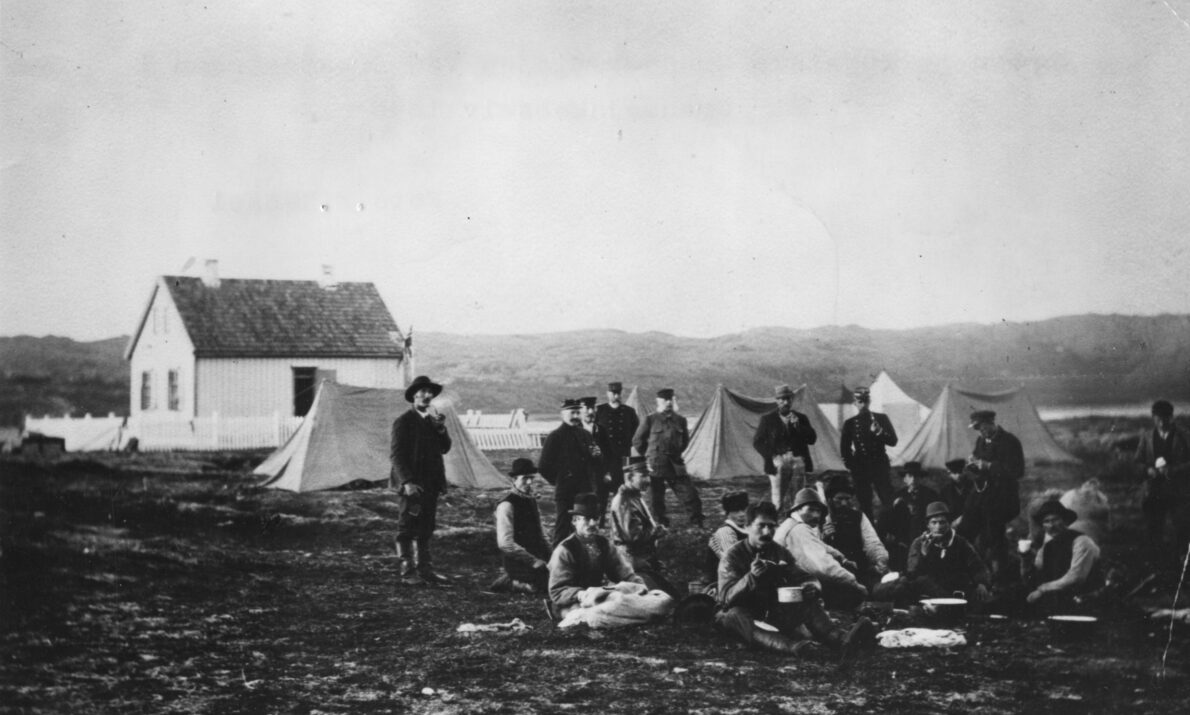
Fra grenseoppgangen i 1896.
Photo: Grensenlandmuseet/DigitaltMuseum
The trail conveys the history of Grense Jakobselv, also known as "Grensen" in colloquial speech. The trail follows the road, and extends for about 15 km. The trail goes through a valley along the western bank of the Norwegian-Russian border river and down to its mouth towards the Barents Sea. Grense Jakobselv has a rich natural landscape where you can find traces of human activity dating back to the Stone Age.
Practical info
Practical info
Opening hours
All stops along the route are open 24 hours a day. The road to Grense Jakobselv is closed during the winter months
Parking
There is parking at each stop along the route
Toilet
Public toilet at the last stop Kaia
How to get here
The Fotefar is located along county road 8860 approx. 50 km from Kirkenes, and is accessible by car
Dining and accommodation
There is no possibility of accommodation or dining in Grense Jakobselv. You can set up a tent or park your camper for one night (no parking on private land) Remember to shop in Kirkenes before you go.
Hiking opportunities
The footpath in Grense Jakobselv follows the road and is approx. 15 km long. There is a shelter with a campfire at the last stop Kaia
Accessibility
Accessibility
The stops with information signs are located along the road, and are easily accessible on foot and with a wheelchair and stroller. The path up to the King Oscar II chapel is steep, and the church itself is not universally designed.
Grense Jakobselv – The borderland at the farthest point towards the sea
The national border between Norway and Russia is 198 km long, measured from the mouth of Grense Jakobselv in the north to Treriksrøysa in Øvre Pasvik in the south. The river rises from the lake Vuorjánláđvi on Grensefjellet, about 1 km from the Norwegian-Russian border. The border runs in the river's deep gullies and is marked by numbered border posts on both sides.
The area's bedrock contains rare occurrences of rocks and minerals. Western and eastern plants and animals meet here, which helps create a unique natural diversity.
Findings of stone tools and ceramics show that people used the area as early as 10,000 years ago. On the terraces along the river and by the fjord, we also find Sami burial mounds from more recent times.
Grense Jakobselv was part of the Skolt Sami Pesjenga siida before the border crossing in 1826. The area has also been used by Northern Sami Sea Sami and reindeer herding Sami.
From the mid-19th century, a vibrant Norwegian rural community of around 100 inhabitants grew up. They eventually got their own church, school, post office, telegraph, customs station and various associations. However, the village was completely abandoned in the 1970s.
The boarding school
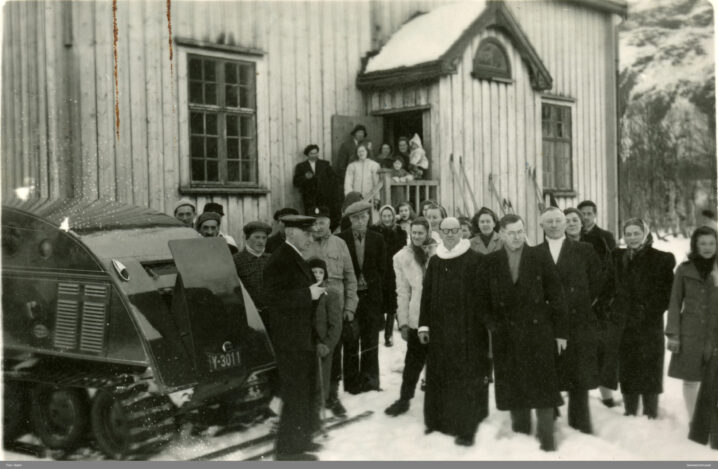
In 1916, the municipality of Sør-Varanger decided that Grense Jakobselv would become a separate school district. The village had previously shared a teacher with Jarfjord and only got its own teacher, Harald Olsen, in 1919. Before the boarding school was completed in 1924, classes were held in rented classrooms on the farms Bjørnhaugskærte, Holmen and Eggermoen.
Due to the distance to the school, schoolchildren from Øvrebygda and Nedrebygda had to rotate with 14 days at school and 14 days at home. The boarding school lacked a housewife, and the salary was instead paid to the caretaker who, together with the teacher, took care of the supervision and care of the students. In the time before the village received electricity, the teacher was also responsible for keeping the building warm.
On the first floor there were classrooms, a kitchen and two bedrooms. On the second floor was the teacher's residence with a kitchen and three rooms. The school library was used as the village's public library. After 39 years in operation, the boarding school was closed in 1964. The village's schoolchildren were transferred to Tårnet School in Jarfjord, 30 kilometers away.
Finngamneset
When the river ice broke up in the spring, large numbers of wild salmon came to spawn in Grense Jakobselv. During the salmon fishing season, the Skolt Sami had a spawning ground on the headland in the river mouth called Finngamneset.
The original settlement areas of the Skolt Sami are the area that today forms the border areas between Norway, Finland and Russia. The Skolt Sami in Grense Jakobselv belonged to the Pesjenga siida – one of seven Skolt Sami siidas. Skolt Sami belongs to the Eastern Sami language group and the Skolt Sami’s own term for themselves is sää´mm.
The Skolt Sami made their living from a combination of hunting, trapping, fishing, reindeer herding and trade. They kept livestock such as sheep and cows, and grew edible plants. They moved between winter, spring, summer and autumn settlements to exploit the resources that were available in the different seasons.
Salmon fishing in Grense Jakobselv was an important source of food for the local population during the winter months. To preserve the fish, it was salted and smoked, and then stored in dry, dark conditions. The salmon was also an important source of income as it could be sold to Norwegian and Russian traders at a good profit.
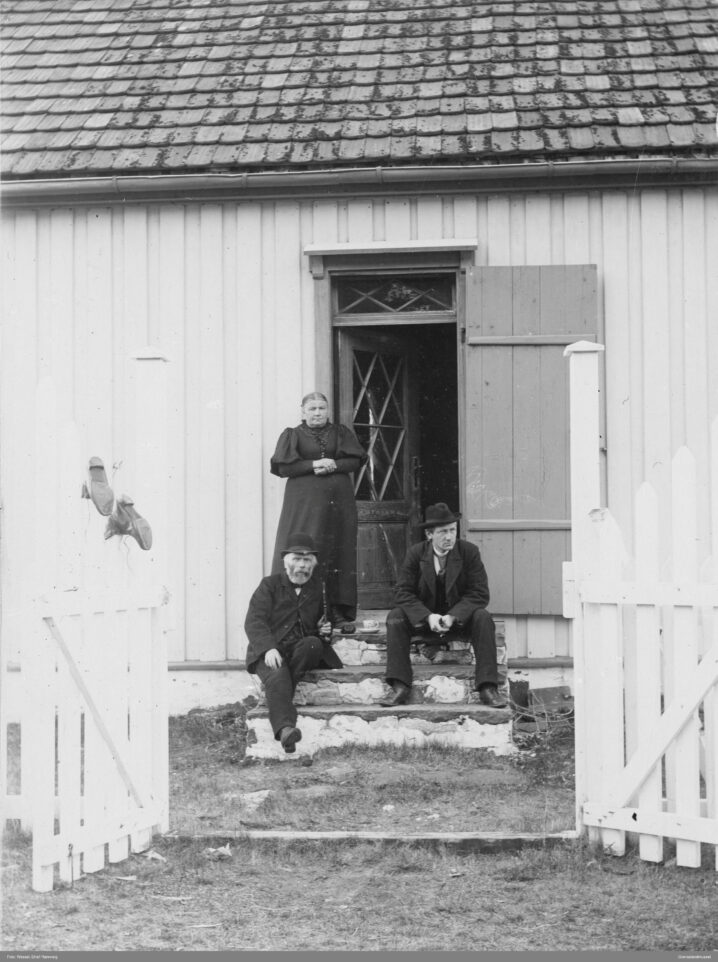
The priest's house
The priest's house, also known as the rectory, was built by the Lutheran congregation for priests on a mission to Grensen. The building was completed in 1867, two years before King Oscar II's chapel was completed.
The priest's house was used by Norwegian soldiers from the start of the Winter War in November 1939 until the Norwegian military's capitulation in June 1940. During the occupation, The priest's house was used as accommodation for Nazi German guards until the autumn of 1944, when the Red Army chased them from the area. In the post-war period, the building was briefly used by Norwegian border guards. The congregation never used The priest's house again after the war. The building has subsequently been used sporadically by the local population for celebrations and commemorations.
A customs station was built north of The priest's house, which was initially only staffed during the fishing seasons, but was staffed all year round from 1885. Until its closure in 1956, the building also functioned as a post office and telegraph station.
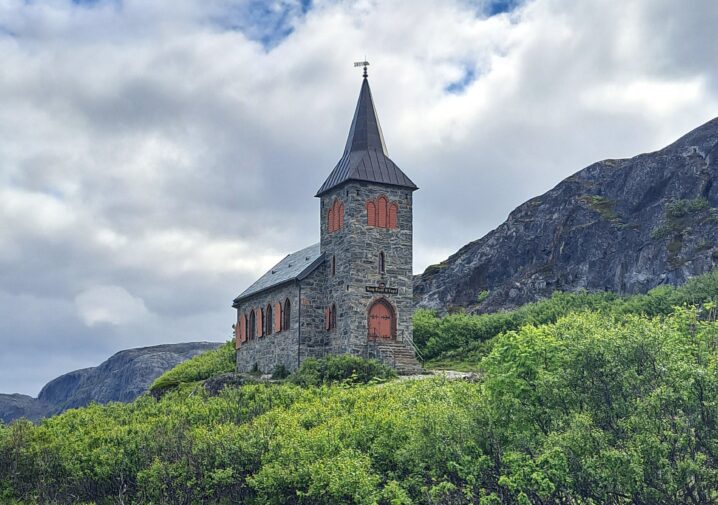
King Oscar II Chapel
King Oscar II Chapel was built in 1869 as a marker of the 1826 border between Russia and Norway. The chapel was designed by architect J. W. Nordan, and built of locally quarried stone.
The border demarcation in 1826 led to conflict between Norwegian and Russian fishermen in Grense Jakobselv. A number of letters of complaint included.
A delegation from the County Governor of Finnmark and Lieutenant Captain Heyerdahl were sent to investigate the matter. After visiting the area in 1861, he proposed that a church should be built, clearly visible from the sea, as a cultural boundary marker to the east. The proposal was approved and construction of the chapel began in 1867.
When King Oscar II was on a trip to Nordland and Finnmark in 1873, he visited Grense Jakobselv. During his stay, the king expressed a wish that the chapel should be named after himself, and so it was.
In the cemetery below the chapel, you can see tombstones and grave crosses with Norwegian, Finnish, Sami and Russian names. This testifies to the diversity of people and stories from different cultures that have lived together in the area.
On the riverbank and out towards the river mouth, you can see remains of fortifications begun during the occupation. The work began in June 1944, but had to be abandoned in October when the Red Army crossed the river. When the war was over, Norway and the Soviet Union signed an agreement to destroy the military fortifications that Nazi Germany had built in Eastern Finnmark.
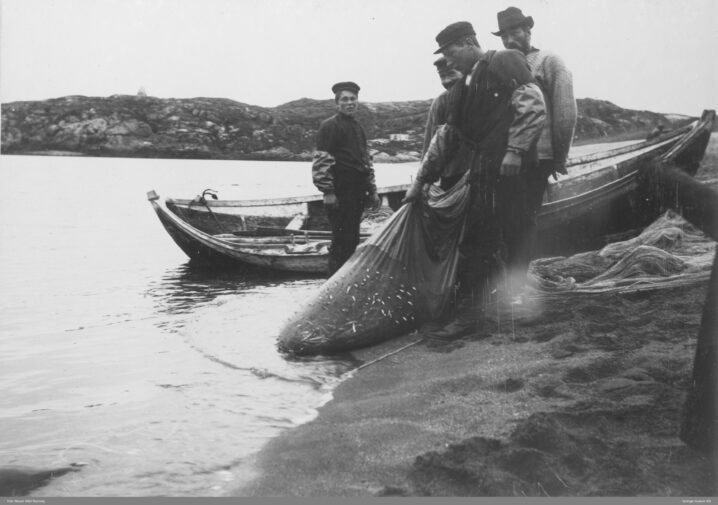
Quay
1 km west of the river mouth between Lillesanden and Storesanden is the quay area. The quay was built in 1935 as an extension of the breakwater. It was destroyed by the storm that raged on Easter Sunday in 1991. Today, the quay area is used as a small boat harbor by cottage owners, and as a hiking and outdoor recreation area in the summer months.
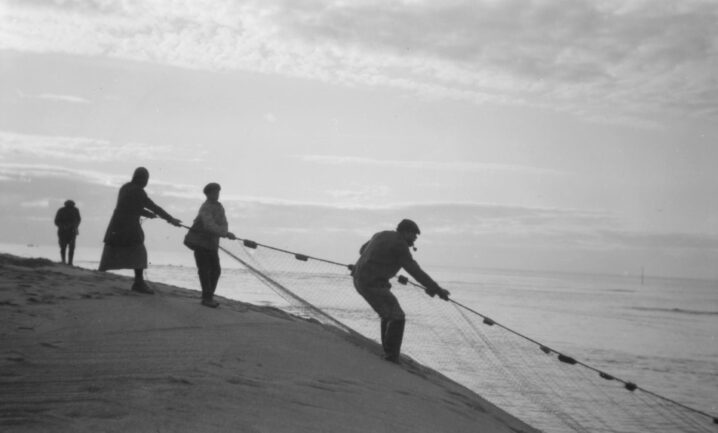
The cold Barents Sea is rich in plankton and krill, which are the food source for large quantities of fish and colonies of seabirds. Local fishermen used to catch capelin and sandeel with nets from the shore. The catch was sold to bait boats that set off from the north side of the Varangerfjord to buy small fish to use as bait. Some of the catch was kept by the local population for their own use. It was dried and stored for use as winter feed for the village's livestock.
Before the First World War, people from Grensen went on shopping trips to Vadsø and Vardø to obtain, among other things, flour and colonial goods, tar and lumber. These goods came to Norway via the Russian Pomors from Kvitsjøen. In exchange, the Pomors bought fresh fish that they salted before transport and resale on the inner Russian markets.
