
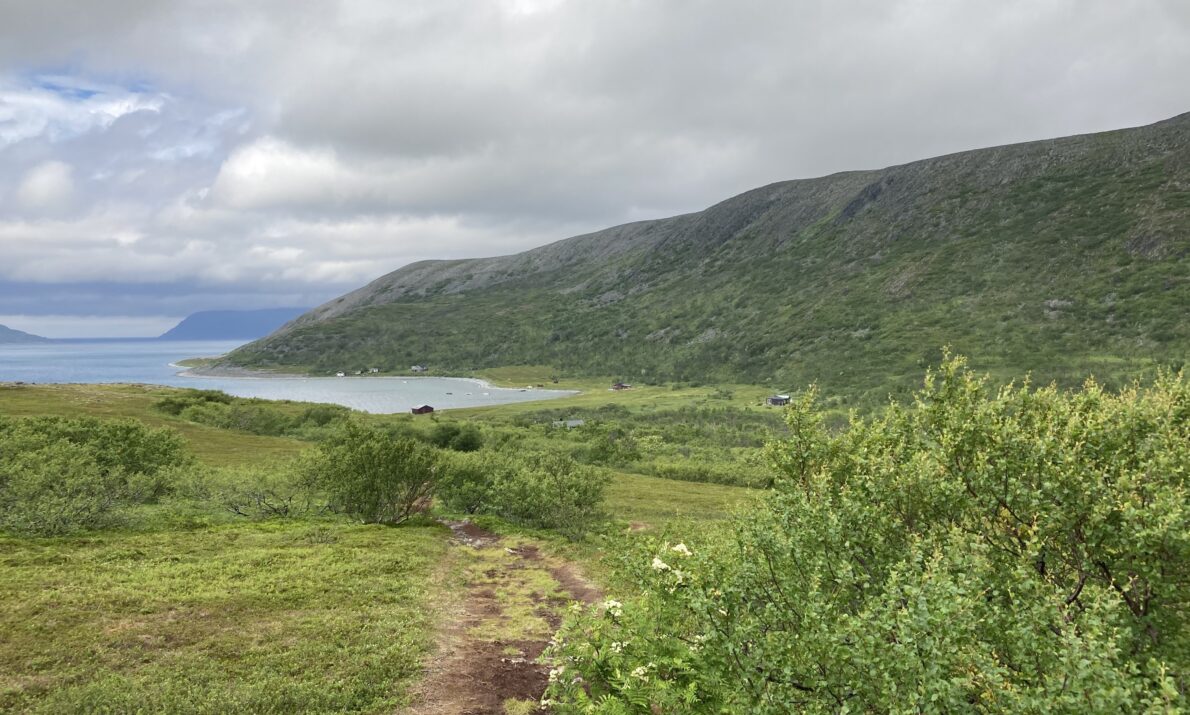
Oksvågen seen from the hiking trail.
Photo: Kristin Foosnæs, Finnmark fylkeskommune
In Oksvågen lie the remains of one of the many whaling stations that were built in Finnmark at the end of the 19th century. The facilities were an important part of the industrialized whaling that took place in Finnmark from 1864 until the total protection of whales in 1903.
Practical info
Practical info
Opening hours
Outdoor area, open 24 hours a day.
Parking
There is a parking lot about 100 meters down the gravel road from highway 894.
Toilet
No
Other
At the end of the cultural heritage area there is a picnic area. The trail is marked as Perletur.
How to get here
Fotefaret is located about 14 kilometers from Kjøllefjord, along highway 894. To get to the parking lot, turn off the highway at the bottom of Oksevågdalen. On the right side when driving towards Kjøllefjord, and the left side if driving from.
Address Austerbotn 1, 9790 Kjøllefjord
Tour description
See Perletur
Accessibility
Accessibility
The trail is not universally designed, and it can be a bit rough and rocky in parts, so the hike is not stroller-friendly. The hike is still considered easy, and is 2 km each way.
Industrialization of whaling in Finnmark
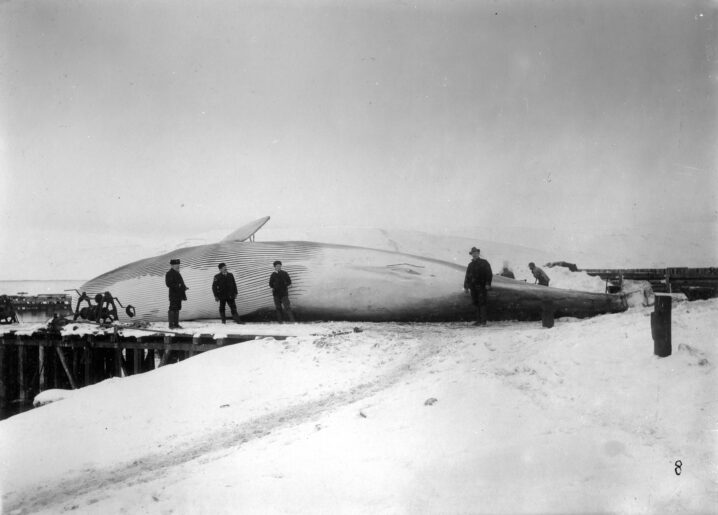
The invention of the grenade harpoon in the mid-19th century and the use of steamboats made it possible to hunt the fast and strong fin whales, such as blue whales, in an industrial manner. Svend Foyn from Vestfold further developed the modern hunting methods, and in the 1860s Foyn turned his interest towards the hunting resources in Finnmark. Oil extracted from whale blubber was the main product, and this was exported on a large scale.
Finnmark's whaling was operated from land-based stations, which were now built up as advanced factories. The first land station was set up on Vadsøya in 1864, and would become the model for around twenty stations, mainly in East Finnmark. The facilities consisted of a number of small and large buildings with special functions and quays.
The land station in Oksvågen
Visitors can see traces of such a land station in Oksvågen. The factory was moved from Jarfjord in Sør-Varanger in 1898, when the fishing base there failed. Handpicked men, with long experience from similar work in Arctic regions, worked at the factory. They lived in simple, uninsulated barracks. The manager who was to represent the owners, "Tønsberg Intressentskab for Hvalfangst", lived in his own home, according to his status.
The station was in operation for six seasons. The catch took place during the summer months. The whale was flanged in a separate flanging house. Here the meat was separated from the bones and the blubber, bones and meat were then taken to the warehouse. Attempts were made to utilize the entire animal through various processes, both meat, blubber and bones.
When production stopped as a result of the whale being protected in 1903, the facility was taken over by a local fish buyer. The stockfish created new jobs and the village grew.
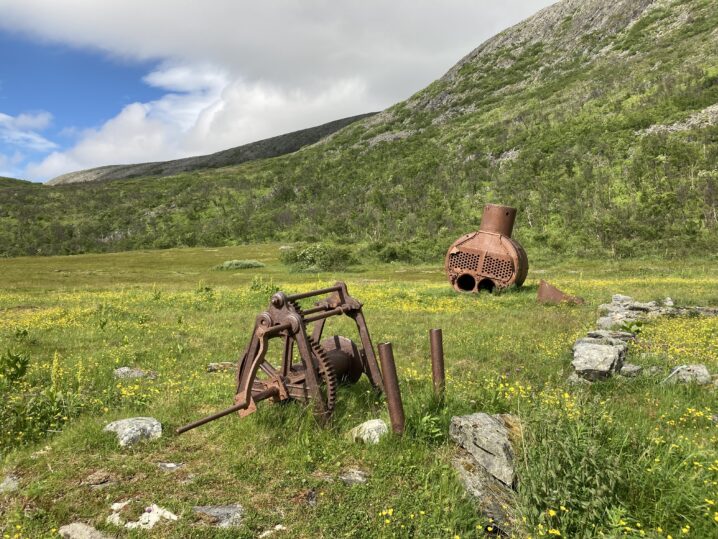
The remains in Oksvågen give an idea of the size and structure of the facility. Here are remains of, among other things, the wharf, workers' housing, flanging houses, warehouses and a forge. A pile of bricks remains from the chimney from the cooking plant. The steam boiler, which protrudes almost three meters above the ground, is clearly visible.
The footpath in Oksvågen is being upgraded, and new signs will be added.
